
Celebrate the Fourth with a Smile!

July 2nd, 2025

As our nation prepares to observe its birthday, we’d like to share some timely dental tips to help make celebrating the Fourth of July more enjoyable for you and healthier for your teeth and gums.

Hydrate

It might be hot and humid where you’re living, so be sure to keep hydrated in the backyard or along the parade route. Proper hydration is essential for both your overall health and your oral health. Drinking water helps prevent cavities by washing away food particles and bacteria and reducing acidic conditions in the mouth. 

Use Ice for Cooling, not Chewing

If you’re enjoying an icy cold beverage to beat the heat, don’t crunch down on that ice! Chewing on ice can lead to immediate disaster in the form of a chipped or cracked tooth or a broken filling or crown. And, over time, munching ice will damage your enamel, making your teeth more sensitive to heat and cold and more vulnerable to cavities. 

Enjoy All Your Cookout Favorites

If you celebrate the Fourth with family and friends, there’s a good chance you’re celebrating outdoors. According to surveys, Independence Day is the most popular grilling day in the country. Are you sitting on the picnic table sidelines because of loose teeth, tooth pain, or missing teeth? Don’t miss out on any of the fun in West Chester! 

  • Tooth pain can be caused by cavities. It can also be a sign of a damaged tooth or an infection. If you suffer persistent tooth pain lasting several days or more, it’s time for a dental appointment.
  • Gum disease can cause bone loss, loose teeth, and lost teeth, making sharing a meal with friends something you avoid instead of something you look forward to. Regular flossing, cleanings, and checkups will help keep your gums in the pink. If you have advanced gum disease, we can discuss treatment options.
  • If you or a loved one wear braces, be sure your BBQ choices are not only delicious, but safe for wires and brackets. Offer menu options which are braces-friendly—that is, which are soft and easy to eat rather than hard, crunchy, or sticky. Remove kernels from corn on the cob and have utensils available to cut finger foods like burgers and hot dogs into fork-friendly bits. 
  • Missing teeth not only make dining difficult, but can also lead to gum disease, decay, and misalignment in adjacent teeth. To enable you to enjoy your meals and to protect your dental health, talk to Dr. Meuselbach about implants, bridges, or dentures to make your smile complete again.

Whether you’re marching in the parade, enjoying a meal with family and friends, oohing and aahing at the fireworks, or all of the above, we wish you a healthy and happy Fourth of July! If you have any dental concerns, we’re here at Robert Scott Meuselbach DDS to help you achieve your best smile every day of the year.
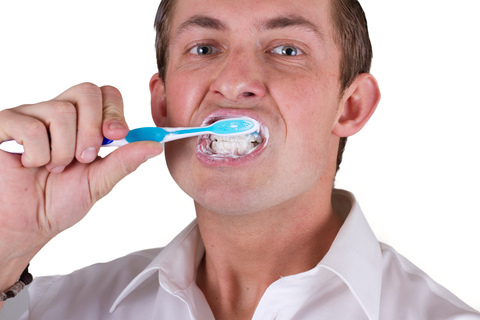

I don't brush while I'm at work. Should I?

June 25th, 2025

Yes, absolutely. A recent survey by Oral-B® reveals that despite knowing that a healthy, good-looking smile affects not only their personal wellness but their professional image as well, very few people (only 14 percent) brush and floss at the office regularly. What’s more, three quarters of people who responded to the survey said they ate twice or more a day at work.

Today, Dr. Meuselbach and our team thought we would provide some tips for brushing at work.

  • Leave a toothbrush at work to increase your likelihood of brushing
  • Brush your teeth twice a day with fluoride toothpaste. Replace your toothbrush every three or four months, or sooner if the bristles are frayed. A worn toothbrush won’t do a good job of cleaning your teeth.
  • Clean between teeth daily with floss or an interdental cleaner; this helps remove plaque and food particles from between the teeth and under the gum line. Tooth decay-causing bacteria still linger between teeth where your toothbrush bristles can’t reach.

And remember to brush for 30 to 45 seconds across visible parts of the teeth. Brushing after breakfast or lunch will eliminate any remaining food particles and odors. We recommend people brush their teeth twice and floss once a day to remove plaque and other harmful bacteria.

To schedule your next appointment with Dr. Meuselbach at our West Chester office, please give us a call!

Three Must-Have Dental Treatments

June 25th, 2025

There are numerous options for dental treatments out there, so how do you choose which are right for you? Our experts at Robert Scott Meuselbach DDS have handpicked the three must-have procedures that we believe can benefit nearly every patient.

  1. Periodontal Exam: This should happen at least once a year and is quick and painless. Dr. Meuselbach or your hygienist will carefully probe around each tooth and take measurements that indicate the health of the bone and its supporting tissue. This appointment is worthwhile because of the known fact that gum disease can increase the risk of potentially fatal conditions such as heart disease and stroke. Silent killers like diabetes can show signs in the mouth before the person becomes aware of other symptoms. Did you know adults lose more teeth to periodontal disease than to cavities? A simple screening once a year could save your smile and boost your overall health!
  2. Dental Sealant: For both adults and children, sealants provide a protective barrier from bacteria deep in the pits and grooves of the teeth where cavities often start. Sealants placed in childhood will often wear away in adulthood, so replacing them is useful because it can help prevent tooth decay later on. Dental insurance will likely not cover sealants for adults, but the cost of a sealant for prevention versus the cost of a filling is much lower, and definitely worth it.
  3. In-office Whitening: Most people develop tooth stains. in-office whitening at our West Chester office is the perfect way to correct discoloration. It’s safe and produces dramatic results in a short amount of time. In two hours, you could take years off your age. Who wouldn’t want that?


Teeth, Bones—What’s the Difference?

June 18th, 2025

They’re often mentioned together, and that’s understandable. After all, they’re the strongest parts of the body, they’re made of many of the same elements, they both require a diet rich in vitamins and minerals to stay healthy, a pirate flag wouldn’t be the same without them–so, what makes teeth and bones different? Glad you asked!

It’s Elementary

Teeth and bones are so strong because of their mineral composition. They have the highest concentration of calcium and phosphorus in the body, and these minerals combine to create sturdy structures which support our bodies, protect our organs, and help break down and digest our food. And they work well together—healthy teeth maintain jawbone density, and healthy jaws hold our teeth firmly in place.

But there are important differences in the anatomy of teeth and bones as well. Bones contain living cells, blood vessels, and nerves. They grow larger as we grow. As we age, old bone tissue breaks down and is constantly replaced with new bone tissue. This process enables our bones to stay strong throughout our lives. And bones heal.

When you break a bone, your body begins working right away to protect and heal the damaged area. Blood cells help with clotting around the break. After a few days, collagen proteins work to replace the clotted cells and form a soft callus. Within weeks, calcium phosphate deposits strengthen the collagen framework. Over time, the bone hardens and reshapes.

And while tooth enamel is the hardest substance in our bodies—harder even than bone—it is not indestructible. Our enamel is basically composed of minerals rather than living tissue, so it can’t regenerate. The enamel covering our teeth doesn’t replace cells as they age, and it can’t create new tooth cells if a tooth is injured through damage or decay. This means that a cracked or broken tooth can’t knit itself together, and enamel lost to decay won’t grow back.

Dr. Meuselbach can restore your smile with fillings, or crowns, or even implants if necessary, but preventing injury to your teeth is always best.

Protecting Teeth and Bones

You can make sure your teeth and bones are their safest and strongest by being proactive.

External bone injuries can be avoided with the use of proper safety equipment. Helmets, padding, work boots—if your work or play recommends protective gear, use it! Fortunately, there’s also protective gear for teeth.

  • Helmets

Helmets not only protect against brain injury and concussion, they are often designed to protect the face, mouth, and jaw as well.

  • Mouthguards

Mouthguards protect the teeth, lips, tongue, and jaw from damages caused by physical contact and falls. They’re available over-the-counter, or ask Dr. Meuselbach to fabricate a custom guard for the most comfortable and secure fit. A custom guard is an excellent option for people with braces, bridgework, or other dental appliances.

  • Night Guards

Grinding and clenching the teeth at night can lead to loose and cracked teeth, headaches, jaw pain, and other unhappy consequences. Protect your teeth from the damage caused by bruxism (tooth grinding) by wearing a night guard.

Finally, one big difference between tooth and bone design: bones are safely hidden away inside the body, while our teeth are exposed to harmful plaque, bacteria, sugars, and acidic foods every day. Give your teeth the preventive care they deserve with twice-daily brushing, flossing, and regular visits to our West Chester office. After all, your beautiful, healthy smile was never designed to be hidden!