Make Tooth Brushing Fun

May 5th, 2021

The best brushing routine for parent and child is two minutes of gentle brushing in the morning and two in the evening. But if the longest four minutes of your day are spent helping your child brush and floss, here are some suggestions for making that time fly.

Options!

Children’s brushes come in a wonderful variety of colors, patterns, and shapes. Allow your child to choose a favorite the next time you go shopping for dental supplies. Just make sure to choose a soft bristle brush with a head designed for small mouths. And since toothbrushes generally wear out after three months, your child will have plenty of opportunities to pick and choose! You might also explore the many flavors of children’s toothpaste to find the one that your child finds most appealing, and let your young brusher squeeze out a dab on that new brush.

Reward Daily Brushing

You don’t have to go to great lengths to make your son or daughter feel rewarded for a job well done. Allowing children to pick out a story for you to read or posting colorful stickers on a calendar sheet will encourage them to get into the habit of brushing.

Two-Minute Countdown

Time seems to go faster when we’re having fun. Your child might enjoy listening to songs or stories for the two minutes of brushing time. You can make your own playlist, invent a story starring your child, or make use of one of the dental apps that offer children’s music, videos, and stories in perfect two-minute segments.

Do It Together

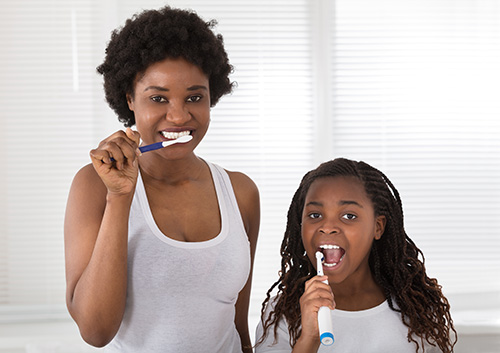
Spend these two minutes twice a day with your child. You will be doing all the brushing at first, of course, but as your children get older, brush your teeth along with them. You can model proper brushing techniques for cleaning teeth, gums and tongue, and even let your child have a chance to brush your teeth for a change.

Don’t Forget Checkups!

Scheduling checkups and professional cleanings at our West Chester office is vital to maintaining your child’s oral health. And, if your son or daughter is keeping up with good hygiene at home, these visits should be a breeze!

The habits your child develops now will be the foundation for a lifetime of oral health. Make these four minutes a day count. And if you can create ways to make them fun, those four minutes will fly by for both of you!

Brushing Tips for Kids

April 28th, 2021

You’re all set for your happy morning and nighttime ritual. You’ve provided your son with his favorite action hero toothbrush and your daughter with her favorite flavored toothpaste. You’ve gotten them into the healthy habit of two minutes of brushing twice each day. You’ve introduced them to flossing. You have favorite brushing songs! Stickers! Gold stars! And, best of all, you’re teaching great brushing techniques.

Kids need the same basic brushing tools and skills as adults. What makes for the best cleaning?

Find the right brush

No matter how cute—or heroic—the brush, it needs to have soft bristles to protect enamel and delicate gum tissue. The head should be a perfect fit for your child’s mouth. And if the handle is easy to grip and hold, you have a winner.

Find the right toothpaste

The bubblegum flavor might appeal to your child, but it’s the fluoride that helps to prevent cavities. Talk to us about the right time to start using fluoride toothpaste and the right amount for your child’s brush.

Teach your child the angles

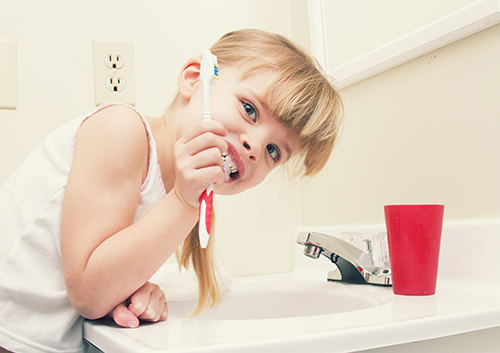
If your child is too young to brush alone, start geometry lessons early. Holding the brush at a 45-degree angle toward the gums will clean bacteria and plaque from the tooth surface and the gum line. And don’t forget the chewing surfaces and the insides of the teeth. When your child begins brushing on her own, coach her as she learns the best way to clean all the surfaces of her teeth.

Easy does it

Teeth and gums should be massaged, not scrubbed. Brushing too hard can damage not only tender gum tissue, but even your child’s enamel.

Learn to let go

No matter how comfortable and appealing the brush, after three or four months, it’s time for a change. Frayed bristles don’t clean as effectively, and making up for it by brushing harder isn’t the answer (see above). Also, toothbrushes can build up quite a collection of bacteria over time (see below), so a fresh brush is a must!

Everything in its place

A toothbrush should dry thoroughly between uses without touching other brushes. Placing a brush in a plastic container doesn’t let it dry and encourages bacterial growth. And a toothbrush needs its own space—touching toothbrush heads means sharing toothbrush bacteria. The best way to keep toothbrushes as dry and as germ-free as possible is to store them upright, without touching other brushes, in a clean, well-ventilated area.

Rinse and repeat

Your child should rinse his toothbrush before and after using it, and be sure to rinse his mouth as well. That should get rid of any leftover food particles brushing has removed.

Finally, keep up the good work! As you teach your child proper brushing techniques, and make sure she uses them as she grows, you are preparing her for a lifetime of great checkups with Dr. Meuselbach at our West Chester office. Give yourself a gold star—you’ve earned it!

Teeth Whitening and Your Smile

April 21st, 2021

The best type of whitening for your smile depends on what you are hoping to accomplish.

Whitening Toothpastes

This is certainly the easiest method of whitening, but will brushing alone produce your whitest smile? Probably not. Whitening toothpastes use chemicals and abrasives to remove some surface stains caused by foods, beverages and smoking. They can also be used to maintain the appearance of your teeth after a professional whitening. However, toothpaste alone cannot change the natural color of your teeth or penetrate the surface of the tooth to remove deeper stains. A whitening toothpaste usually takes several weeks to produce results. Be sure to choose a product with a seal of approval from a reputable dental association and carefully follow the instructions for use.

Whitening Strips and Gel Trays

Whitening gels can be applied at home with strips or tray kits. These peroxide-based gels are stronger than the formulas used in toothpaste.

Strips come coated with the whitening gel and work when pressed to your teeth for a specified amount of time. One difficulty here is making sure each tooth is completely covered by the strip so that even whitening takes place. Tray and gel whitening systems provide a mouthguard-like appliance that is filled with whitening gel and applied to your teeth, again for a specific period of time. Because one size does not fit all, stock trays can be ill fitting and lead to problems with gums and soft tissue. You can talk to our team about a custom-fitted appliance and whether gel whitening is your best option.

Some users find gel products cause tooth and gum sensitivity and even enamel damage. These over-the-counter gel products will not work on caps, veneers, crowns, or bridges, and there might be underlying conditions in your natural teeth that will make the use of these products ineffective. Please talk to us at your next visit to our West Chester office if you are interested in whitening at home, so we can advise you on how to achieve the best and safest outcome.

Office Treatment

Professional whitening makes use of a gel with a higher concentration of peroxide and should only be provided by Dr. Meuselbach or a member of our team at our West Chester office. This process is generally faster, more effective and longer lasting. We take care first to examine your teeth for pre-existing conditions such as cavities and gum disease that could cause problems. We protect your gums when the gel is applied in office and monitor the procedure. We can assess the progress of the whitening and suggest further treatment if needed. Custom mouthpieces can also be an option if you would like to use a whitening gel at home. A personally molded tray will fit your teeth perfectly and allow a more precise application of the peroxide gel.

Some teeth are not good candidates for normal whitening procedures at home or in office. If you have dark stains caused by trauma, drugs such as tetracycline, discoloration due to root canals, or darker dental bonding, crowns, or other prosthetics, please talk to us about other possible solutions. We want to help you achieve your brightest possible smile.

Why Baby Teeth Matter

April 14th, 2021

Sleepless nights, crankiness, drooling—how can such tiny teeth cause such a big fuss? But all those uncomfortable days and nights are forgotten when your baby’s first teeth make their appearance. Why? Well, certainly because your child is happier, but also because you know baby teeth, or primary teeth, are important for your child’s growth in so many different ways.

  • Chewing and Eating

Your baby might enjoy solid foods at an early age, but real chewing doesn’t happen until all the baby molars appear between the ages of one to three years. This is the time to feed children size-appropriate and texture-appropriate foods so they acquire proper chewing and eating habits for healthy digestion. Chewing also helps develop your child’s jaw and facial muscles.

  • Developing Speech

Pronouncing many of the common sounds used in speech often requires tongue and teeth working together. If teeth are missing or there is a bite problem such as an open bite, it might be more difficult to pronounce words properly. This could be only a temporary delay, or it could require speech therapy when your child is older.

  • Setting the Stage for Permanent Teeth

Baby teeth not only help with speech and jaw development, but they serve as space holders for permanent teeth. If a primary tooth is lost too early, a permanent tooth might “drift” into the empty space. The adult tooth will not have the room to fit where it should, and crowding or misalignment can occur. This might cause orthodontic problems in the future.

  • Learning Healthy Dental Habits

You are your baby’s first dental health care provider! Wiping the gums and erupting teeth with a soft damp cloth after meals, gently brushing baby teeth when your toddler is young, teaching how to brush as your child gets older, helping to establish daily routines for brushing—all these practices will prepare your child for lifelong healthy dental habits.

  • Making the Dentist a Regular Part of Your Child’s Life

Your child should visit our West Chester office soon after that first tooth comes in, and definitely by the age of 12 months. Dr. Meuselbach can help with suggestions for your brushing and flossing routine, make sure your child’s teeth are healthy and clean, and ensure that teething progress is on track. In later visits, we will examine your child’s primary teeth and gums, and treat any problems, such as cavities, before they can become serious.

It turns out that baby teeth really are a big deal. Talk to us about suggestions for caring for your toddler’s teeth and about any questions you may have about teething progress, jaw and facial structure, speech development, or any other concerns at any time. We want to have a happy relationship with your child from the very start for a lifetime of healthy and confident smiles.